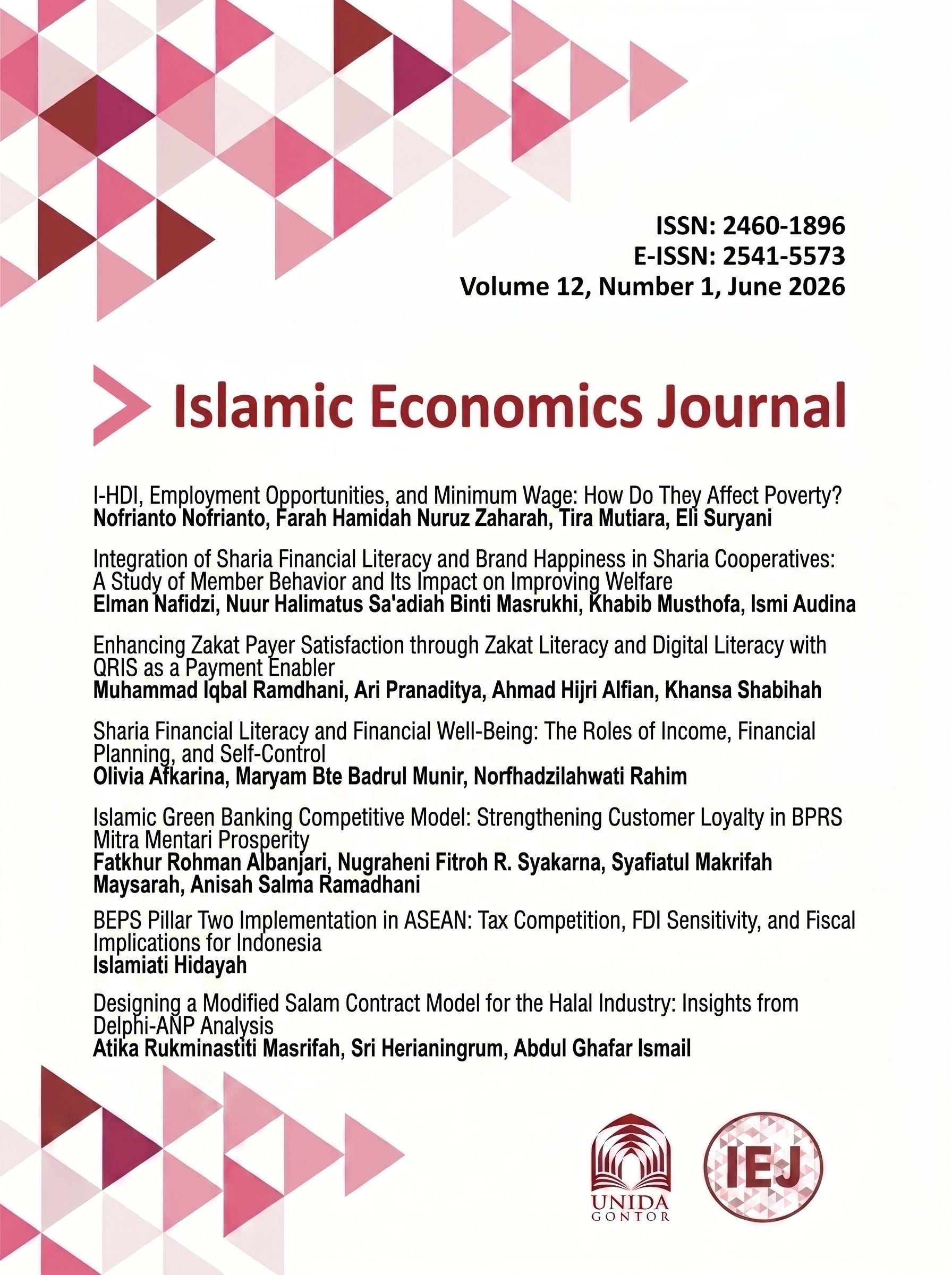
Sharia Financial Literacy and Financial Well-Being: The Roles of Income, Financial Planning, and Self-Control
DOI:
https://doi.org/10.21111/iej.v12i01.60Keywords:
Shariah Financial Literacy, Financial Planing, Income, Self-control, Financial Well-BeingAbstract
This study was motivated by the low level of Islamic financial literacy, financial planning, and self-control in the consumptive behavior of the people of Kesamben Wetan Village, which may hinder the achievement of financial well-being. This study aims to examine the effect of Islamic financial literacy, financial planning, and income on financial well-being, with self-control serving as a mediating variable. This research employed an exploratory quantitative approach. Data were collected via online and offline questionnaires distributed to 220 respondents selected through purposive sampling. The data were analyzed using the SEM-PLS method with SmartPLS 4.0 software. The findings indicate that Islamic financial literacy and financial planning do not directly affect financial well-being, whereas income and self-control have a significant effect on it. In addition, self-control mediates the relationship between Islamic financial literacy and financial planning on financial well-being, but does not mediate the effect of income on financial well-being. These findings emphasize the important role of psychological factors, along with income, in improving financial well-being in rural communities. An important implication of this study is that improving the financial well-being of rural communities cannot rely solely on financial literacy and financial planning education, but also requires strengthening self-control, fostering disciplined financial behavior, and promoting sustainable community economic empowerment.
Downloads
Submitted
Accepted
Published
Issue
Section
License
Copyright (c) 2026 Islamic Economics Journal

This work is licensed under a Creative Commons Attribution-ShareAlike 4.0 International License.