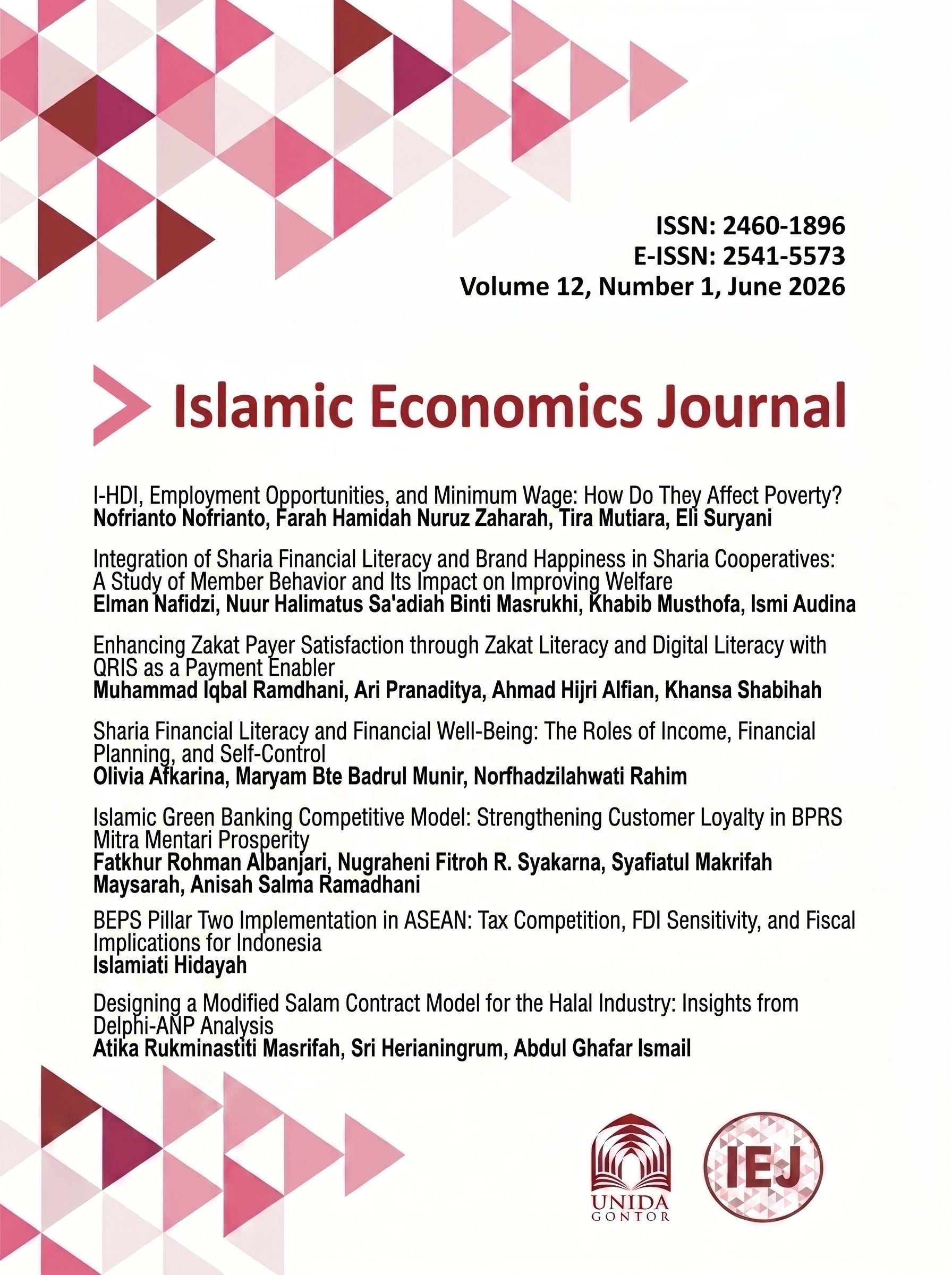
Enhancing Zakat Payer Satisfaction through Zakat Literacy and Digital Literacy with QRIS as a Payment Enabler
DOI:
https://doi.org/10.21111/iej.v12i01.56Keywords:
zakat literacy, digital literacy, technology acceptance model, customer satisfaction.Abstract
Zakat is one of the five pillars of Islamic social finance and is a form of maliyah ijtima'iyah worship (worship related to property and social), which must be performed by Muslims if they meet certain conditions (property reaches the nisab and haul, among others). The level of zakat literacy among Muslims also remains varied. Many individuals still have a limited understanding of zakat obligations, calculation methods, distribution mechanisms, and the role of digital technology in facilitating zakat payments. This condition may affect zakat payers' satisfaction with digital payment platforms provided by zakat institutions. Consumer satisfaction in QRIS-based zakat payments is an important academic and practical issue because it determines the effectiveness, acceptance, and sustainability of digital zakat services, while also enriching the limited literature on the role of zakat literacy, digital literacy, and digital payment systems in Islamic social finance. This study aims to examine the effects of zakat literacy, digital literacy, perceived usefulness, and perceived ease of use on customer satisfaction toward QRIS-based zakat payments using an extended Technology Acceptance Model. This research was conducted with 190 zakat payers at LAZIS in Semarang City who have used QRIS for payment. The data analysis in this study was conducted using Structural Equation Modeling (SEM) with AMOS software. The findings reveal that zakat literacy, digital literacy, perceived usefulness, and perceived ease of use positively affect customer satisfaction with QRIS-based zakat payments, indicating that higher levels of literacy and positive perceptions of technology enhance users’ satisfaction with digital zakat payment services.
Downloads
Submitted
Accepted
Published
Issue
Section
License
Copyright (c) 2026 Islamic Economics Journal

This work is licensed under a Creative Commons Attribution-ShareAlike 4.0 International License.