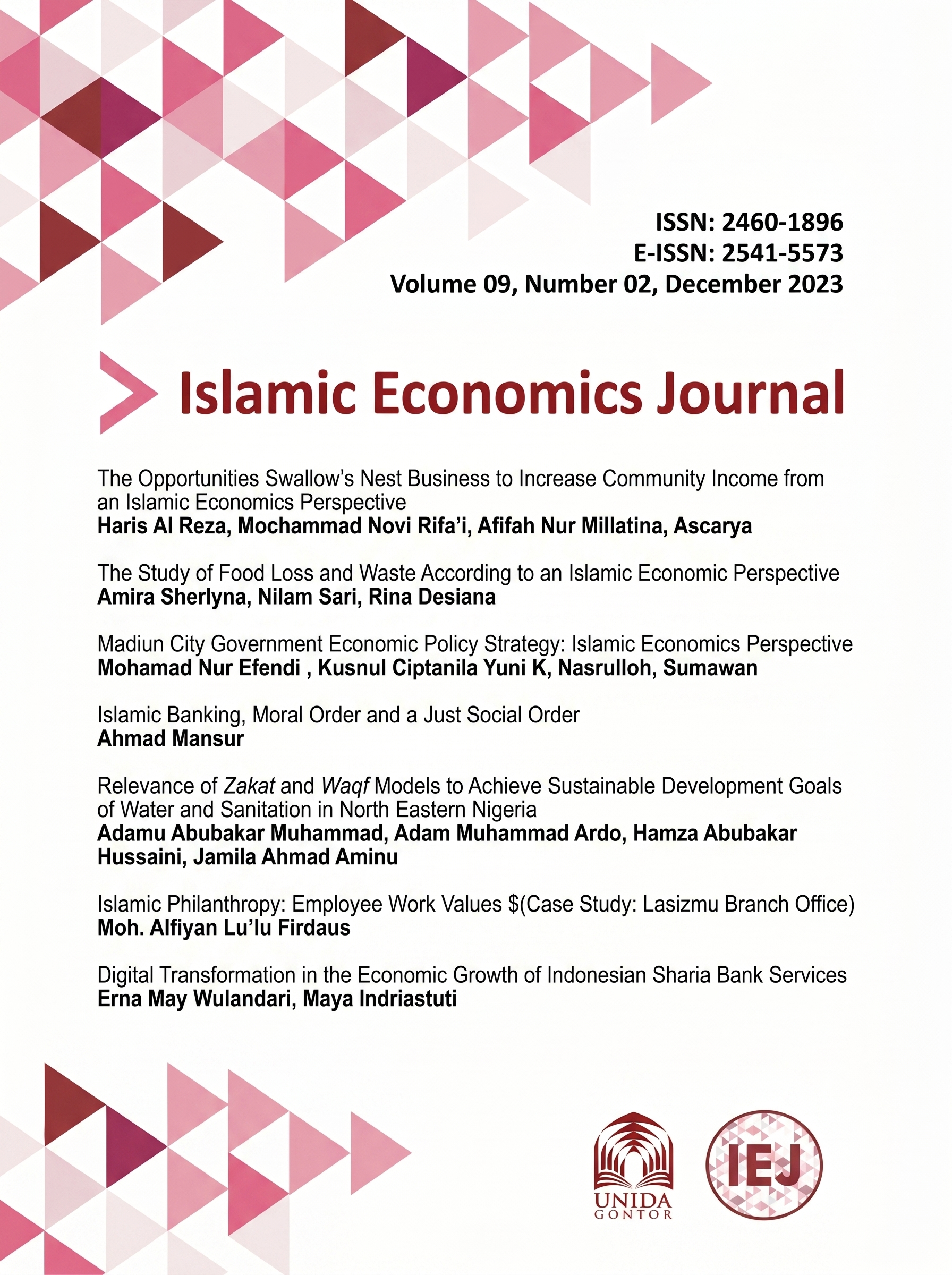
Relevance of Zakat and Waqf Models to Achieve Sustainable Development Goals of Water and Sanitation in North Eastern Nigeria
DOI:
https://doi.org/10.21111/iej.v9i02.38Keywords:
Clean Water, Sustainable Development Goal, Sanitation, Waqf, Zakat.Abstract
The study's main goal was to evaluate the effectiveness of Zakat and Waqf funds in ensuring the access to clean water and adequate sanitation, as well as reducing the use of open defecation in north eastern, Nigeria, by hastening the adoption of Islamic teachings on
sanitation and charitable programs. The study used a qualitative research approach that included review of literature, content analysis, interview with experts and organizations that were relevant. The study’s findings revealed that in the total number of respondents, 40% are unaware or never used with modern toilet facilities, about 75% households have no any kind of modern toilets, uses traditional and uncovered toilets, 60% are in need of it but poverty, literacy and environment denied them to have it, while 20% promised to find its alternative for their safety within the year 2023. The beneficiary communities who received internal and external support programs through Zakat and Waqf funds and other charitable means led to more improvement in planning, coordinating, collecting, financing, monitoring, and supervising various projects of access to clean water and sanitation in the study area.
Downloads
Submitted
Published
Issue
Section
License
Copyright (c) 2023 Islamic Economics Journal

This work is licensed under a Creative Commons Attribution-ShareAlike 4.0 International License.